

The exhibits at the Rochdale Hope Chapel Heritage Centre fall into two types. The first type is the unique features of the historic chapel itself. The second is the artifacts relating to those who have been associated with Hope Chapel down through more than two hundred years of it’s existence. Considering the first aspect, Hope Chapel has high significance for architectural, historic and communal value, particularly with respect to the remarkably intact interior and fittings, which are of the highest level of significance. Due to the hastening rate of chapel closures, demolitions and unsympathetic conversions, intact chapel interiors are becoming increasingly rare. The late Georgian pulpit, gallery, box pews, communion rail and pipe organ are all intact and unaltered. Also of historic importance is the burial ground which surrounds the chapel.
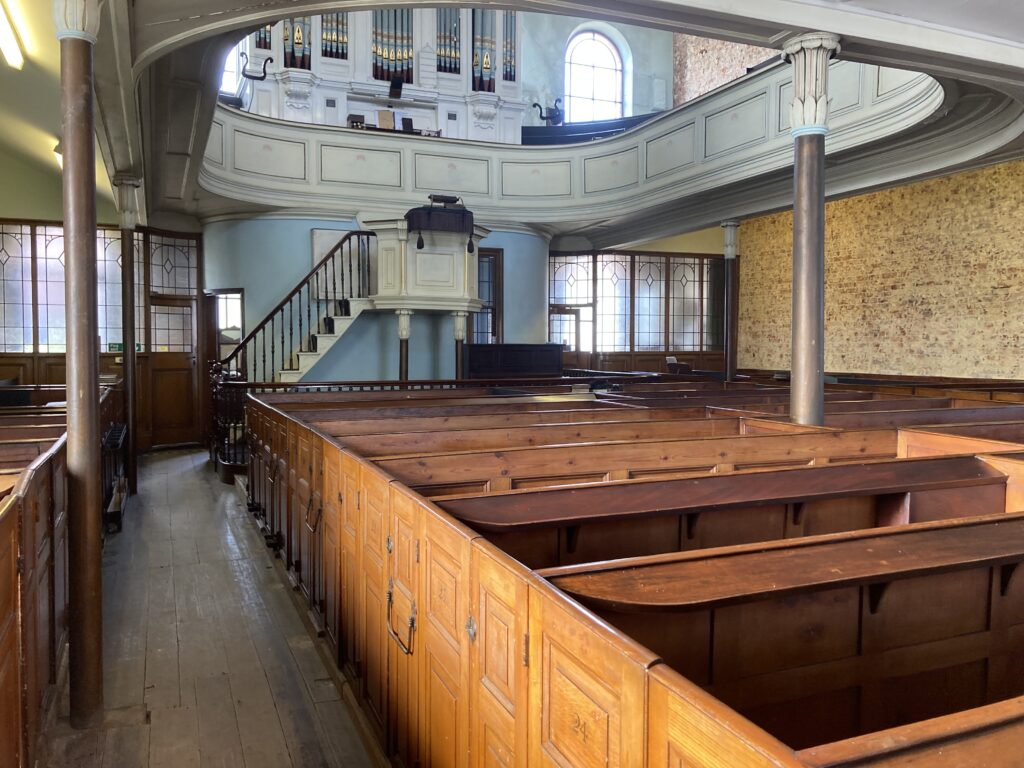
The pulpit and communion rail
The pulpit, in common with all non-conformist places of worship, is the focal point of the interior. This flows from the conviction that the preaching of the Word of God should have the central place in the whole of the worship conducted in the chapel. The pulpit, in common with most of the rest of the interior, dates from the enlargement of the chapel in 1848. It is made of painted, gilded timber, with raised panels, on cast-iron columns with lotus capitals, with a staircase with mahogany handrail and moulded balusters. Close examination reveals that all the balusters are of different designs. Similarly, the communion rail has a mahogany top and moulded balusters, also each being of different design. This is also an extremely rare feature in non-conformist chapels of the period.
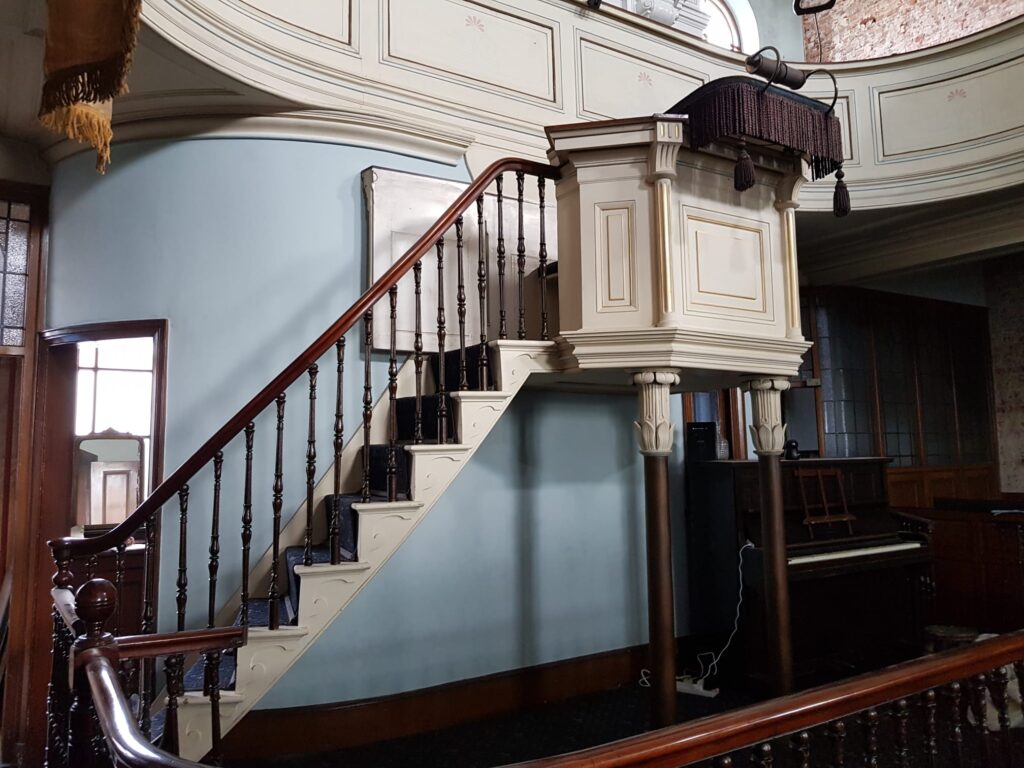
The gallery
Unfortunately, the name of the builder who designed Hope Chapel has not been recorded. He was clearly someone with considerable skill in chapel construction, because when you stand in the chapel, what strikes you is the fact that, despite the fact that the building is able to seat 730 people, the interior is remarkably intimate. Those seated in the gallery do not feel that the preacher in the pulpit is far away from them. In addition, all have a clear view of the pulpit from where they are sitting. The gallery lines all four sides of the upper part of the building, and has pleasantly curved corners. The whole is supported on cast iron columns, with lotus capitals. The panneled front of the gallery has stenciled painted decoration, and a mahogany top rail.
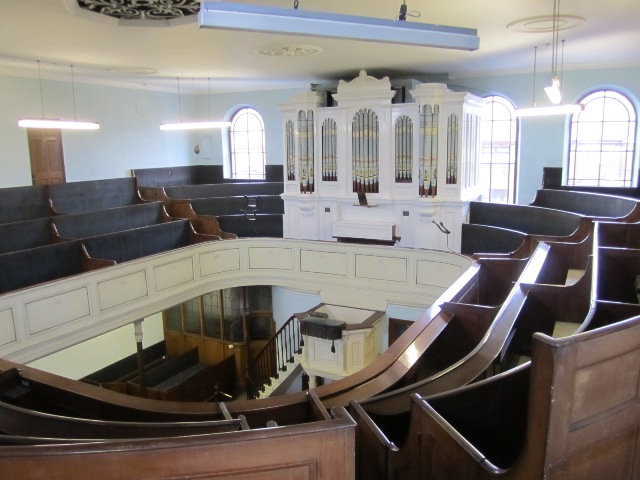
The pews
The box pews are a magnificent aspect of the original interior dating from the extension of the chapel in 1848. They are made of pine, the ones on the ground floor finished with fielded panels, all on both the ground floor and the gallery have mahogany top rails, a quite lavish detail. In addition, notice how the final two sets of pew doors at the rear of the chapel on the ground floor, rise up to head height as a pleasing aesthetic feature, when looking from the front. This feature is believed to be very rare in historic chapel interiors.
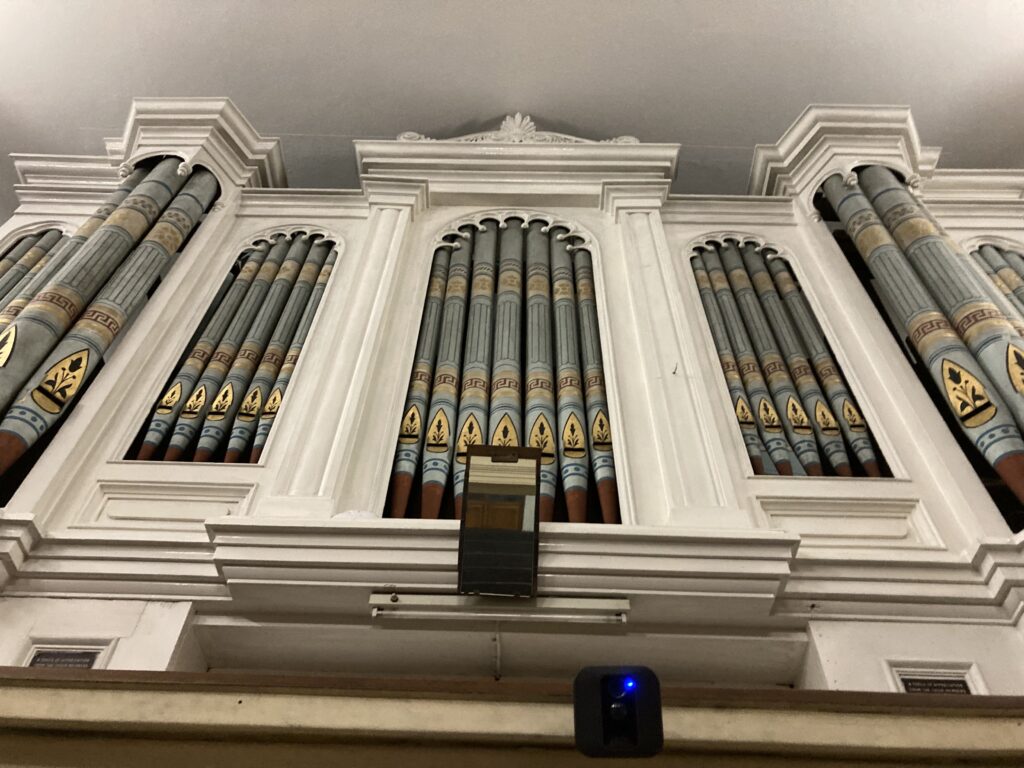
The pipe organ
The pipe organ is also an original feature of Hope Chapel, dating from 1848. The organ is quite striking in relation to the fact that it has been placed directly above the pulpit and therefore forms an impressive sight within the aesthetic whole of the interior. It has a painted timber case, incorporating both gothic and classical motifs. The pipes have stenciled and painted decoration. The instrument was last rebuilt in 1895, and can still be played. It has a most melodious sound.
Plaques
Read more about our recently restored plaques > here <
Artifacts related to Hope Chapel
The Christian testimony of Hope Chapel through more than two centuries is bound up with the ministers who have served the church, and the members of the congregation. We hope to have items on display covering both these aspects. We can only touch on a few items of interest here.
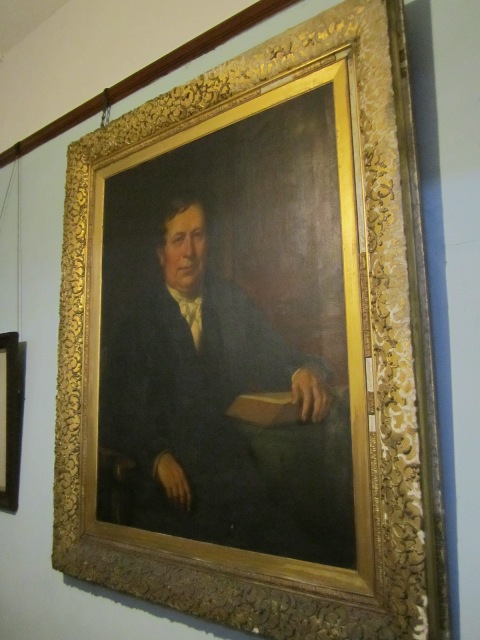
As mentioned elsewhere on this website, the ministry of John Kershaw (from 1817 to 1870) over more than 52 years formed a remarkable period in the history of the church. It spanned a period of profound socioeconomic change for the town of Rochdale itself, during which it became one of the world’s most prominent cotton processing centres. But the message of God’s free grace in Christ which John Kershaw preached was the same Gospel which has been proclaimed down through the centuries of the Christian church. And the Spirit of God mightily used it to the building of His church, not only in Rochdale, but also far afield. The establishment of several other congregations in Lancashire and in other parts of the north of England was inseparably related to the ministry of John Kershaw. We hope that the painting of John Kershaw which hung in the vestry of Hope Chapel for so many years will be on display there again, when the Heritage Centre opens. An old photo of it is shown below. In addition, we hope to display various other items of interest related to the gracious ministry of John Kershaw, such as the Bible which he used when preaching at Cheesden Mill.
Down through the years, countless ordinary people’s lives have been transformed by the free grace of God which they heard preached at Hope Chapel. We can mention persons such as George Crabtree, who was teacher and superintendent of the Sunday School for 35 years. He died on 19th May 1894, ages 67 years. A tablet to his memory which originally hung in the school room, can be found on the right hand wall of the chapel. His zeal for the work of the Sunday School and for the cause at Hope Chapel was extraordinary. He and his family lived for many years at Cheesden, a distance of over 4 miles from the chapel. On the Lord’s Day morning, they would leave home on foot before daylight, and arrive home in the evening after dark. But George Crabtree is said never to have missed one Lord’s Day in all the 35 years of his being teacher and superintendent of the Sunday School.
We would be very interested to hear from anyone who may have items which are in any way related to the Chapel such as photographs, memorabilia etc. Please either use the Contact us tab, or send an email to contact@rochdalehopechapel.org.uk.